
Sony a7R VI Underwater Camera Review
Watch our video review and see the Sony a7R VI in action along with our impressions of this heavy-hitter camera. Click here to watch on YouTube. The Sony a7R VI is the latest generation of Sony's high-resolution full-frame mirrorless camera, and on paper, it looks like a relatively modest update to the already excellent Sony a7R V. The resolution is a little higher, autofocus has been improved, dynamic range is better, and the viewfinder gets some nice refinements. But after spending time shooting the Sony a7R VI underwater in Fiji and Monterey, we came away with a different impression. The biggest changes aren't necessarily the ones that stand out on a specification sheet. Battery life is dramatically better, and the video capabilities are a massive step forward. The Sony a7R VI also introduces an all-new, faster stacked sensor, which enables 4K 120p, 8K 30p, and, most importantly for underwater shooters, 4K 60p without a crop. The result is a camera that feels like much more than simply a higher-resolution Sony a7R V. For the first time, the a7R series feels like a serious underwater photo-and-video hybrid. Sony a7R VI | Canon 8-15mm Lens | 1/250 | ISO 400 | ƒ13Sony a7R VI | Nikonos 13mm Lens | 1/250 | ISO 100 | ƒ8We had the pleasure of shooting the Sony a7R VI in radically different environments, with a wide range of subjects, lenses, and shooting conditions. Across all of them, the camera consistently exceeded our expectations.IMAGE QUALITYSTILL A HIGH RESOLUTION MONSTER There is no doubt that the image quality from the Sony a7R VI is gorgeous straight out of the camera. That's what this camera is all about, and we expected it. The Sony a7R VI uses a new 66.8-megapixel stacked sensor, compared to the 61-megapixel sensor in the Sony a7R V. That's roughly a 10% increase in resolution. You're probably not going to look at two images and immediately notice a 10% difference in resolution. The additional resolution is certainly useful for cropping, but we wouldn't call it a transformational improvement by itself. The more interesting story is what that new sensor can do beyond simply producing more pixels. The Sony a7R VI has about a 10% increase in resolution compared to the Sony a7R V, meaning it has slightly more latitude for cropping. That said, the true story of the new sensor used by the Sony a7R VI has more to do with overall image quality than just raw resolution.Sony a7R VI | Nikonos 13mm Lens | 1/160 | ISO 640 | ƒ13While what’s under the hood has changed quite a bit (new sensor, processor and battery) the overall profile of the Sony a7R VI is similar to its predecessors, making it instantly familiar to any Sony user.CLASS-LEADING DYNAMIC RANGE The Sony a7R VI has excellent dynamic range, and this is one area where we noticed an improvement over the Sony a7R V. Don't get us wrong, the Sony a7R V already has solid dynamic range. But the Sony a7R VI gives you even more latitude when working with difficult, high-contrast scenes. We noticed this most when editing our images. We could bring back significantly more shadow detail without introducing much additional noise, while also recovering more information from highlights. We were super impressed by the fine detail available in shadows when editing, creating extremely rich images.Sony a7R VI | Sony 28-60mm Lens & Nauticam FCP-1 | 1/250 | ISO 200 | ƒ13 That extra latitude is particularly useful underwater, where you're often dealing with extremely high-contrast scenes like sunballs. With these shots, you're trying to capture a bright sun and the surrounding water while still retaining detail in darker areas of the image. The Sony a7R VI handled those scenes extremely well, producing richer and more usable images that developed beautifully in post-production. The Sony a7R VI makes challenging sunball exposures much easier, handling both the intense highlights of the sun and the darker surrounding water to produce a beautifully balanced image.Sony a7R VI | Sony 28-60mm Lens & Nauticam FCP-1 | 1/250 | ISO 400 | ƒ22HIGH RESOLUTION MEETS HIGH ISO PERFORMANCE There's also a common misconception that high-resolution sensors perform poorly in low light. The Sony a7R VI proves otherwise. In our testing, we found the camera produced remarkably clean images at high ISO, with ISO 6400 remaining extremely usable. One of the major compromises of high-resolution sensors has traditionally been low-light ISO performance. The Sony a7R VI remains usable at high ISOs, generating clean images. Underwater, we generally didn't need to push it that far. The highest ISO we actually needed during our dives was 1600, and at that setting the images were exceptionally clean, with very good shadow detail and minimal color noise. That gives you more flexibility when shooting in darker environments, underneath kelp canopies, or when you need a little more reach from your strobes. For a camera with nearly 67 megapixels of resolution, the low-light performance is impressive. The highest ISO we used with the Sony a7R VI underwater was 1600, which produced minimal noise and gain.Sony a7R VI | Nikonos 13mm Lens | 1/50 | ISO 1,600 | ƒ14UNDERWATER VIDEOTHE BIGGEST UPGRADE: 4K 60P WITHOUT THE CROP If the improvements to still photography are a welcome step-up, the video improvements are a massive leap forward. This is where the Sony a7R VI becomes a fundamentally more capable camera, and where it starts to feel like a true hybrid rather than a high-resolution stills camera that happens to shoot video. The Sony a7R V could shoot good video, but there was one major limitation for underwater shooters: 4K 60p was cropped. And 4K 60p is our go-to resolution and frame rate for underwater video. You can play it back at normal speed, or slow it down for smooth, dramatic slow-motion footage. When you're shooting a wide-angle lens with the Sony a7R V, a crop can be a big deal. That can force you to move farther away from your subject, which isn't ideal underwater. This is because it can hurt image quality and make lighting your subject difficult. The Sony a7R VI removes that compromise. You can shoot 4K 60p without a crop while maintaining the native field of view of your lens. That makes a huge difference when you're trying to fit a large animal, a diver, or an entire reef scene into the frame. And this is the point where the Sony a7R VI stops feeling like a high-resolution stills camera that happens to shoot video and starts feeling like a true hybrid. Watch this video and check out the fantastic video quality produced by the Sony a7R VI. This is the first a7R camera we comfortably use as an underwater video rig. Click here to watch on YouTube.SUPER SLOW-MO 4K 120P If you want even more slow motion, there's also 4K 120p. This is another first for a Sony a7R camera. At 30p playback, 120p footage gives you four times slow motion while maintaining a 4K image. This is fantastic for fast-moving subjects, schooling fish, animal behavior, and macro subjects where slowing down the footage can reveal details that are difficult to see in real time. By default, the camera normally applies a 1.1x crop when shooting 4K 120p. However, there's an option in the menu called Angle of View Priority Mode that allows you to shoot 4K 120p without that crop. The tradeoff is that you lose the camera's in-camera noise reduction. For this reason, we’d reserve this mode for brighter conditions or situations when you're using video lights. CROP & REFRAME WITH 8K 30P The Sony a7R VI can also shoot 8K 30p, compared to 8K 24p on the Sony a7R V. It will apply a 1.2x crop, however, this can work to your advantage, particularly for macro video where you might want a tighter shot. The additional resolution is also great for reframing and cropping in post-production editing. That said, the file sizes are considerably larger, and you don’t have the extra frames of 4K 60p for playing back your footage slower. For this reason, most underwater shooters will not shoot a ton of 8K, outside of a few relatively niche scenarios. RICH CUSTOM WHITE BALANCE COLOR And then there's something underwater shooters care about that doesn't show up in the headline video specifications: custom white balance. Sony has been doing this well since the Sony a7S III, and the Sony a7R VI continues that tradition. We found the camera consistently produced accurate, vibrant colors at recreational depths when using a custom white balance. Updating the white balance underwater is quick and straightforward, which makes it easy to adjust as you descend or the lighting conditions change. Compared to the Sony a7R V, there isn't a major difference here. But compared to older a7R cameras, this is a massive improvement. For anyone shooting underwater video, Sony's custom white balance performance remains one of the major reasons to consider the system. THE MOST REFINED a7R EVERTRUE ALL DAY SHOOTING PERFORMANCE This might be the last thing we expected to be excited about on the Sony a7R VI: battery life. But in our real-world shooting, it turned out to be one of the biggest improvements and one of our favorite features of the camera. The Sony a7R VI uses the new Sony NP-SA100 Battery, and the difference in endurance was dramatic. During our workshop in Fiji, some of our first dives of the day ended with 90% battery remaining. That's an extraordinary result for a mirrorless camera. The new Sony NP-SA100 Battery is one of our favorite features of the Sony a7R VI, and we were completely blown away by the runtime it gave us. Sometimes the biggest improvements aren’t sensor or video related! Instead of constantly thinking about how much battery you have left, or worrying about whether you’ll need to swap batteries between dives on the wet pitching deck of a boat, you can just concentrate on shooting. It reminded us of shooting an older DSLR or a professional mirrorless body, where battery life was something you simply didn't think about very much. So for us, this ended up being one of the biggest real-world improvements over the Sony a7R V. Not because it's particularly exciting on a specification sheet, but because it changes how you actually use the camera. A BRIGHTER, CLEANER VIEWFINDER The Sony a7R VI's electronic viewfinder (EVF) also receives some subtle improvements. The image looks cleaner in low light, with less visible grain and improved color rendition. That's a nice improvement underwater, particularly when you're shooting macro or working in darker environments such as underneath a kelp canopy. The auto-dimming feature of the electronic viewfinders equipped by the Sony a7R VI helps the camera conserve battery while it isn't in active use. Electronic viewfinders use a surprising amount of battery, more than the larger LCD screen. The EVF also automatically dims when the camera isn't being used, helping conserve battery power. It returns to normal brightness as soon as you press a button. We found the feature to be seamless and didn’t get in the way of shooting. Overall, this isn't a revolutionary viewfinder upgrade, but it is another refinement that makes the camera extremely pleasant to use underwater. ACCURATE & INTELLIGENT AUTOFOCUS Autofocus is becoming more and more difficult to judge between camera models. Modern mirrorless cameras are already incredibly good, even at lower price points. So the question isn't whether the Sony a7R VI has good autofocus, it's where we can actually see the improvement. The Sony a7R VI’s autofocus system really shined with macro photography. Not only does the camera’s high resolution help with cropping and reframing, but the autofocus could also easily track the eyes of moving subjects.Sony a7R VI | Sony 100mm Lens | 1/250 | ISO 100 | ƒ4 For us, the answer was macro. Shooting macro underwater is the toughest test for any autofocus system. When you're trying to nail focus on a tiny subject extremely close up, the depth of field is often razor thin, and the smallest shift in focus can mean the difference between a perfect shot and a missed one. The Sony a7R V already had excellent autofocus, so it was hard to imagine how Sony could make it significantly better, but the Sony a7R VI surprised us. Even camouflaged subjects hiding in busy backgrounds were easily tracked by the Sony a7R VI. The camera had no difficulty locking on to this pipefish’s eye despite how well it blends in.Sony a7R VI | Sony 100mm Lens | 1/100 | ISO 100 | ƒ7.1 What impressed us most was how intelligently the Sony a7R VI tracked small subjects. It could reliably track incredibly small subjects and their eyes, in low light, without a focus light or a focusing aid such as the Nauticam MFO-1. Using the Sony 100mm macro lens, the camera consistently found and stayed on the subject's eye, even with an external diopter. For us, this is the ultimate test for an underwater autofocus system, and the Sony a7R VI passed with flying colors. If you're coming from a Sony a7R III or Sony a7R IV, the difference will feel dramatic. From a Sony a7R V, the difference is more subtle. But after a few dives, you start to notice just how improved the autofocus is. What truly impressed us was the Sony a7R VI’s ability to track through a diopter, even following a subject’s eye. This is the most difficult test for any autofocus system, which it easily passed.Sony a7R VI | Sony 100mm Lens & Nauticam SMC-3 | 1/200 | ISO 100 | ƒ18THE CANON 8-15MM LENS AUTOFOCUS CAVEAT There is one important exception to the camera’s otherwise excellent autofocus capabilities. With the Canon 8-15mm fisheye lens paired with a Metabones adapter, we found that continuous autofocus tracking wasn't nearly as reliable as native Sony lenses. Autofocus itself works, and the lens can still produce excellent images, but continuous tracking isn't as consistent as we would have liked. Our best guess is that the older lens and adapter combination may not be able to take full advantage of the Sony a7R VI's more advanced autofocus system. Fortunately, the workaround is simple. We turned tracking off and used single-point AF-S, which made the results become dramatically more consistent. The Canon 8-15mm lens with a Metabones adapter is still a good fisheye solution for Sony cameras, however, autofocus tracking was unreliable with this setup, so we relied on AF-S instead for consistently sharp images.Sony a7R VI | Canon 8-15mm Lens | 1/160 | ISO 400 | ƒ16 With native Sony lenses, we had no issues. The Sony 28-60mm lens behind wet lenses such as the Nauticam WWL-1B and Nauticam FCP-1 worked extremely well, and, as we mentioned before, the Sony 100mm macro lens was particularly impressive. So if you're building a new Sony a7R VI system and autofocus tracking is important to you, we'd strongly recommend sticking with native Sony lenses. If you already own the Canon 8-15mm fisheye lens and Metabones adapter, the lens is still very usable. Just keep in mind that AF-S is the more consistent choice than continuous autofocus tracking. The Sony a7R VI autofocus tracks beautifully with native lenses, such as the Sony 28-60mm lens with water contact optics like the Nauticam FCP-1.Sony a7R VI | Sony 28-60mm Lens & Nauticam FCP-1 | 1/200 | ISO 640 | ƒ13WHO IS IT FOR?SHOULD YOU UPGRADE FROM THE SONY a7R V? After spending all this time with the camera, the big question is whether you should upgrade from a Sony a7R V. If you're upgrading purely for resolution, probably not. Unless you're a serious pixel peeper or regularly need to make very tight crops, the jump from 61 to 66.8 megapixels isn't enough by itself to justify replacing a Sony a7R V and housing. All in all, the Sony a7R VI is a meaningful improvement over the Sony a7R V in terms of image quality, battery life, autofocus, and video specs. But that's not really the story of this camera. The Sony a7R VI's biggest advantages are its battery life, video capabilities, and overall image quality improvements like dynamic range. The combination of dramatically improved runtime and uncropped 4K 60p makes the Sony a7R VI significantly more versatile underwater. The improved dynamic range, low-light performance, autofocus tracking, and viewfinder are all welcome additions. These are all individual refinements that add up to a serious improvement over this camera’s predecessors. If you're coming from a Sony a7R III, Sony a7R IV, or are looking to jump into full-frame mirrorless, the equation is very different. The improvements in autofocus, image quality, battery life, video, and overall usability add up to a much more significant upgrade. Sony a7R V | Sony 28-70mm Lens & Nauticam WACP | 1/125 | ISO 200 | ƒ11Sony a7R VI | Sony 28-60mm Lens & Nauticam FCP-1 | 1/125 | ISO 800 | ƒ14The Sony a7R V still produces beautiful images, and the differences between the two cameras aren’t always obvious at first glance. But after spending time shooting and editing with the Sony a7R VI, its improved dynamic range, low-light performance, and overall image quality become more and more noticeable.a7R VI VS. THE FLAGSHIP a1 II: The more interesting comparison is with Sony's flagship hybrid, the Sony a1 II. The Sony a7R VI has moved surprisingly close to the Sony a1 II in terms of what it can do underwater. It offers higher resolution, excellent video capabilities, dramatically improved battery life, and Sony's latest autofocus and viewfinder technology. The photo and video features of Sony a7R VI put it directly in competition with the flagship Sony a1 II. While the Sony a7R VI is less expensive and has a higher-resolution sensor, the Sony a1 II has a faster flash sync speed (1/400 sec) and can sync with a strobe up to a blazing 20fps. But the Sony a1 II still has some important advantages. The first is flash sync speed. The Sony a7R VI tops out at 1/250 second with flash, while the Sony a1 II can reach 1/400 second. That may not sound like a huge difference, but underwater it can matter. If you're shooting sunballs or regularly diving in bright, shallow water, the additional shutter speed lets you reduce ambient light without reducing your strobe output. The Sony a1 II is also significantly faster when shooting with a flash. The Sony a7R VI can shoot up to 10 frames per second (fps) with flash, while the Sony a1 II can reach 20fps. That can be a meaningful advantage when shooting fast-moving action, behavior, or giving you the power to pick the perfect frame in a sequence. That said, 10fps is already plenty for most underwater photographers. Sony a7R VI | Canon 8-15mm Lens | 1/250 | ISO 400 | ƒ13Sony a1 II | Sony 28-60mm Lens & Nauticam WACP | 1/400 | ISO 400 | ƒ14The photo and video features of Sony a7R VI put it directly in competition with the flagship Sony a1 II. While the Sony a7R VI is less expensive and has a higher-resolution sensor, the Sony a1 II has a faster flash sync speed (1/400 sec) and can sync with a strobe up to a blazing 20fps. So if you're regularly shooting bright tropical water, sunballs, and fast-moving subjects, the Sony a1 II still has some important advantages. But if you're primarily shooting in temperate water, darker environments, or you simply want extremely high resolution combined with serious video capabilities without spending flagship money, the Sony a7R VI is an extremely compelling option. a7R VI VS. THE CANON & NIKON COMPETITION The Sony a7R VI also faces serious competition from cameras such as the Canon EOS R5 II and Nikon Z8. Both offer excellent image quality, autofocus, and video capabilities, and both can be compelling choices depending on your existing system and priorities. Now sporting more capable video specs, along with the high-resolution sensor and class-leading dynamic range, the Sony a7R VI has edged out the competition in several categories. One of the Sony a7R VI's biggest advantages is resolution. At 66.8 megapixels, it significantly exceeds the 45-megapixel sensors in both the Canon EOS R5 II and Nikon Z8 cameras. We also found Sony's autofocus particularly impressive with very small macro subjects. The Canon and Nikon both have excellent autofocus systems, but in our experience, the Sony a7R VI was a little more refined when tracking tiny subjects at extremely close distances. Video is a more complicated comparison. The Canon EOS R5 II is a serious competitor when it comes to underwater video and custom white balance color, while the Nikon Z8 has excellent video specifications on paper. Custom underwater white balance behavior is an important differentiator, however. Sony's system has proven extremely reliable at depth, while the Nikon Z8's underwater white-balance performance is significantly more limited. The Nikon Z8 can perform a custom white balance to about 50 feet, and the color out of camera is poor compared to Sony or Canon. The Nikon Z8 does have the ability to shoot RAW video, but the file sizes are extremely cumbersome, and color grading is a grueling process. We find that using a standard picture profile combined with a custom white balance creates far more consistent and easier results. Sony a7R VI | Sony 100mm Lens & Sony 1.4x Teleconverter | 1/200 | ISO 100 | ƒ13Canon EOS R5 II | Canon 24-50mm Lens & Nauticam WWL-C Lens | 1/100 | ISO 200 | ƒ16Nikon Z8 | Nikon Z 105mm & Nauticam EMWL 160 Degree Lens | 1/160 | ISO 800 | ƒ32While the Canon EOS R5 II and Nikon Z8 are fantastic cameras and have their own unique capabilities, the Sony a7R VI represents the latest in camera technology and is a step above when it comes to features such as image quality, autofocus, and battery life. The Sony a7R VI also has a leg up when it comes to flash sync speed. At 1/250 second, it barely edges out the Nikon Z8 and Canon EOS R5 II at 1/200 second each. This isn’t as dramatic as the Sony a1 II’s 1/400 second, but it does give the Sony a7R VI a little more room to squash ambient light in bright environments compared to the competition. Price is another consideration. The Canon EOS R5 II and Nikon Z8 are generally less expensive than the Sony a7R VI. That said, in the grand scheme of purchasing an underwater housing, ports, and other accessories, the savings on a camera body can become less significant, making going all-in on the latest and greatest more appealing. Ultimately, all three are excellent cameras. The best choice will depend on what you shoot, your budget, and whether you're already invested in a particular camera system. But for underwater shooters who want the highest possible resolution, class-leading dynamic range, all while getting seriously capable underwater video performance, the Sony a7R VI is an exceptionally strong choice, and our current go-to high-resolution photo-video hybrid. ProsDramatically improved battery lifeThe first a7R camera that truly feels like a hybrid photo/video cameraExcellent 66.8-megapixel image qualityKiller dynamic range and high-ISO performance4K 60p without a crop 4K 120p, & 8K 30p optionsExcellent underwater custom white balanceSuper accurate & reliable autofocus tracking with Sony lenses Cons10 fps with flash vs 20 fps with Sony a1 II & Nikon Z81/250 second flash sync is better than most, but slower than the Sony a1 II's 1/400 secondCanon 8-15mm + Metabones autofocus tracking is less reliableWHY BUY FROM BACKSCATTER?Free lifetime tech support with every purchase. We will beat any advertised price. 20+ years of in-house warranty service and repair. Free shipping to the USA and Canada, and low-cost international shipping.Learn more!IMAGE GALLERY Check out our sample images captured using the Sony a7R VI underwater. Click on an image to enlarge it for even more detail. .photo-modal-dialog { width: 100% !important; height: auto !important; padding-right: 3% !important; padding-left: 3% !important; display: block; float: left; } ××××××××××××××××××CAMERA & HOUSINGSSony a7R VI Full-Frame Mirrorless Camera ORDER NOWAquatica A7rVI HousingORDER NOWIkelite Sony a7 IV a7R V, a7 V, & a7 VI HousingORDER NOWNauticam NA-A7RVI HousingORDER NOW
Related Posts
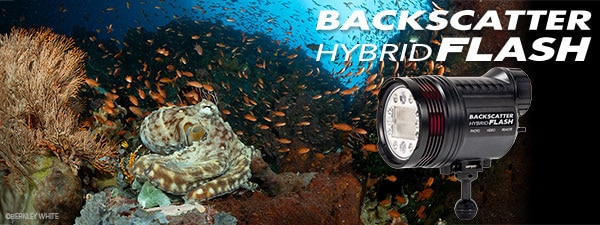
Backscatter Hybrid Flash Underwater Strobe & Video Light Review
With the introduction of the Backscatter Hybrid Flash HF-1, underwater photographers can now capture stunning stills and video with a single versatile tool. The Hybrid is the most powerful strobe and ...
Read More 
Sony a7R VI Underwater Camera Review
The Sony a7R VI is the latest generation of Sony's high-resolution full-frame mirrorless camera, and on paper, it looks like a relatively modest update to the already excellent Sony a7R V. The re...
Read More 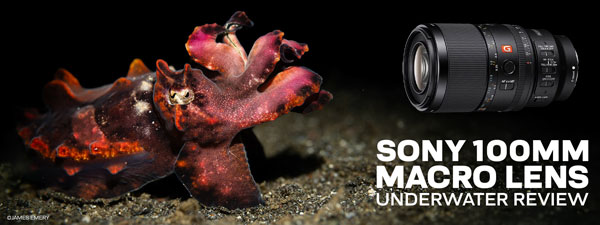
Sony 100mm Macro Lens Underwater Review
The Sony 100mm is the most exciting new macro lens for underwater imaging we have seen in years. Featuring high-quality, razor-sharp G Master series glass, enhanced autofocus performance, a native 1.4...
Read More 
The Best Underwater Strobes Tested 2026
It may or may not be a surprise, but there are no industry standards or governing bodies conforming the methods, or the specifications, on how underwater strobes are tested. Most strobe manufacturers ...
Read More 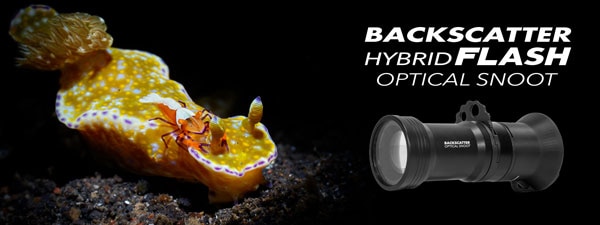
Backscatter Hybrid Flash Underwater Optical Snoot Review
With the Optical Snoot OS-3, the super-bright, wide-angle beam of the Hybrid Flash is transformed into a precision lighting tool. From tiny macro critters to dramatic fish portraits, the Optical Snoot...
Read More 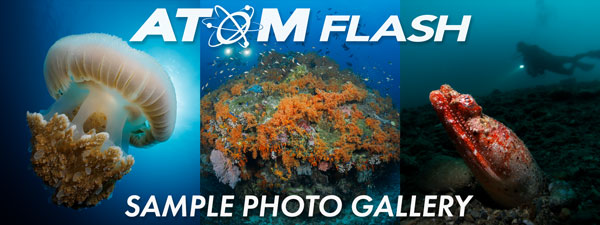
Backscatter Atom Flash Sample Photo Gallery
The new Atom Flash and Optical Snoot OS-2 combo is an incredibly versatile underwater flash system, built from the ground up for the purist underwater photographer. Whether lighting massive underwater...
Read More