
Nauticam MFO-1, MFO-3, & SMC-3 Underwater Macro Lens Review
THREE LENSES. ONE VERSATILE MACRO SETUP. What if you could transform your camera’s macro lens into three radically different tools? That’s exactly what Nauticam’s MFO-1, Nauticam SMC-3, and Nauticam MFO-3II lenses make possible. While they may look like simple wet lenses, each one fundamentally changes how your macro system behaves underwater. The Nauticam MFO-1 optimizes your autofocus for everyday macro shooting. The Nauticam SMC-3 pushes your setup into true super macro. And the Nauticam MFO-3II transforms a long macro lens into a wider tool that can handle larger subjects and blackwater photography. The Nauticam MFO-1, Nauticam SMC-3, and Nauticam MFO-3II each change the way a macro lens behaves underwater, making them extremely versatile additions to any macro setup. The real advantage comes when you use all three together. With a single macro lens on your camera, you can switch between super macro, everyday macro, and wider macro perspectives on the same dive, without changing your camera lens or port. Team Backscatter put the Nauticam MFO-1, Nauticam SMC-3, and Nauticam MFO-3II to the test in real-world conditions to see what each lens does, how they affect your images, and how they can expand the possibilities of a single macro setup. ×Watch the video and see us compare the Nauticam MFO-1, Nauticam SMC-3, and Nauticam MFO-3II in the field. Click here to watch on YouTube.WHAT IS A DIOPTER? A diopter, or close-up lens, is a lens that attaches to your camera lens to help it focus closer to a subject. Underwater-specific close-up lenses are designed to mount externally to the housing’s port and are considered “wet lenses.” Adding a diopter changes the camera system’s working distance, allowing you to focus closer than you could with your camera’s lens alone. A diopter affects both the minimum and maximum working distances, narrowing the range over which you can focus. By limiting the focusing range to closer distances, a diopter makes it possible to fill more of the frame with small subjects and fine details than you could without one. Diopters come in different strengths: lower-power options like the Nauticam MFO-1 provide a more moderate change in working distance, while higher-power options like the Nauticam SMC-3 allow you to work much closer for super macro shooting. A diopter allows your macro lens to focus closer than it could on its own, but this comes at the cost of a narrower working range and shallower depth of field. There is a tradeoff, however: a stronger diopter isn’t always better. As the diopter strength increases, the available working range becomes narrower, and the depth of field becomes shallower, making it more difficult to achieve and maintain sharp focus, especially with moving subjects. This makes higher-power diopters more specialized for super macro photography. The Nauticam MFO-1 and Nauticam SMC-3 fit neatly into this category of diopter. The Nauticam MFO-3II, however, works differently. Rather than simply allowing you to focus closer, it changes the lens’s field of view. For this reason, we consider the Nauticam MFO-3II an underwater conversion lens rather than a diopter. Diopters, like the Nauticam SMC-3, provide greater magnification by allowing you to focus much closer than you normally could, making it possible to capture smaller subjects and finer details.Canon EOS R5 II | Canon RF 100mm Lens & Nauticam SMC-3 | 1/200 | ISO 100 | ƒ4MFO-1: THE EVERYDAY MACRO OPTIMIZER MFO stands for Mid-range Focus Optimizer, and the Nauticam MFO-1 is designed to do more than simply magnify your subject. Rather than only functioning as a traditional close-up diopter, it improves the overall macro shooting experience by making autofocus easier to manage while also improving image quality. Depending on the camera and lens combination, the Nauticam MFO-1 provides approximately 1.2x to 1.6x magnification. That’s useful for getting a little closer to your subjects, but magnification isn't the primary reason to use the Nauticam MFO-1. Its real advantage is how it changes the way your macro lens focuses. The Nauticam MFO-1 provides added magnification, but super macro isn't its primary purpose. Instead, it acts as a focusing aid while also improving image quality.Sony a7R VI | Sony 100mm Lens & Nauticam MFO-1 | 1/250 | ISO 100 | ƒ4MINIMIZE FOCUS HUNTING Just like other close-up diopters, the Nauticam MFO-1 compresses the working distance of your camera’s macro lens. But unlike traditional diopters that prioritize extreme magnification above all else, the Nauticam MFO-1 leaves you with a much larger, more comfortable working distance. Compare the working distances of a Nikon Z 105mm macro lens on its own, with the Nauticam MFO-1, and with the Nauticam SMC-3. The Nauticam MFO-1 allows you to focus closer than the standard macro lens while maintaining plenty of working room, while the Nauticam SMC-3 provides the closest working distance for super macro shooting. This compressed range is a massive advantage for autofocus. With a Nikon Z 105mm, for example, the Nauticam MFO-1 shifts your working distance to roughly 108mm to 1,000mm. Your lens can still technically focus to "infinity," but that infinity is now optically capped at just one meter away. This solves a major headache: focus hunting. When a standard macro lens behind a flat port loses a subject, the autofocus can waste precious seconds searching the distant water column before finding the subject again. By capping your maximum focus distance to a practical macro zone, the Nauticam MFO-1 ensures your autofocus stays snappy and accurate, while still giving you plenty of room to track moving subjects without forcing your port right into the reef. By compressing the focus range, the Nauticam MFO-1 reduces focus hunting and makes it easier to keep autofocus on the subject.Sony a7R V | Sony 100mm Lens & Nauticam MFO-1 | 1/80 | ISO 200 | ƒ5.6CORRECTIVE OPTICS FOR SHARPER IMAGES The Nauticam MFO-1 also acts as a corrective optic between your macro lens and the flat port. It helps improve sharpness while minimizing distortion and color fringing that can occur when shooting through a flat port alone. The result is an accessory that serves two purposes at once: it makes your camera easier to focus and can improve the optical performance of your macro setup. For most macro photographers, that's what makes the Nauticam MFO-1 so useful. It isn't just a specialized super macro accessory for the smallest subjects only. Instead, it is an everyday part of your macro setup, making autofocus easier to manage while giving you the flexibility to shoot a wide range of subjects. Check out this comparison shot with and without theNauticam MFO-1||. Without the Nauticam MFO-1||, there is blue color fringing around the edges of the subject. With the Nauticam MFO-1||, the image is sharper, with no fringing and more accurate color. Sony a7S III | Sony 100mm Lens & Nauticam MFO-1 | 1/125 | ISO 100 | ƒ16SMC-3: TRUE SUPER MACRO PERFORMANCE When the subject is tiny and fine detail is everything, the Nauticam SMC-3 lens is the tool to reach for. An evolution of Nauticam’s popular Nauticam SMC-1, the Nauticam SMC-3 was designed with modern mirrorless cameras in mind. It’s smaller and lighter than its predecessor while delivering approximately 2.3:1 magnification and improved working distance. NAUTICAM SMC-3NAUTICAM SMC-1The Nauticam SMC-3 is smaller and lighter than the Nauticam SMC-1, with an optical design optimized for modern mirrorless cameras and a greater working distance.2.3:1 MAGNIFICATION FOR TINY SUBJECTS Depending on the camera and lens combination, the Nauticam SMC-3 can provide approximately 2.3:1 magnification. In practical terms, that means a subject can appear roughly 2.3 times its actual size on the camera’s sensor. That level of magnification opens up a world of subjects that can be difficult to capture with a standard 1:1 macro lens. Pygmy seahorses, tiny shrimp, nudibranch rhinophores, and other minute details can fill the frame with an incredible level of detail. The Nauticam SMC-3 delivers approximately 2.3:1 magnification, making it possible to fill the frame with incredibly small subjects and fine details, like this tiny pygmy seahorse.Sony a7R V | Sony 100mm Lens & Nauticam SMC-3 | 1/30 | ISO 200 | ƒ8 Generally, when using a close-up diopter, your working distance is greatly reduced. The Nauticam SMC-3 improves on the Nauticam SMC-1 by providing increased working distance, giving you more space between the lens and your subject while providing virtually the same magnification. That extra room matters underwater. It gives you more flexibility to compose, makes it easier to approach skittish animals without disturbing them, and provides modern mirrorless autofocus systems with more room to acquire and track the subject. The result is a super macro lens that combines the magnification needed for extremely small subjects with a more forgiving shooting experience. If your goal is to capture the tiny subjects and details underwater, the Nauticam SMC-3 is the right tool for the job. MFO-3: THE NEW “60MM” The Nauticam MFO-3II takes the opposite approach from a traditional macro accessory. Instead of just pushing you closer to the subject, it expands the field of view of your camera’s macro lens. When paired with a full-frame 90mm, 100mm, or 105mm macro lens, the Nauticam MFO-3II produces a field of view closer to that of a full-frame 60mm lens. That gives underwater photographers the ability to capture large subjects with the same long macro lens they’d use for small subjects. WITHOUT NAUTICAM MFO-3WITH NAUTICAM MFO-3The Nauticam MFO-3II expands the field of view of longer macro lenses, making it easier to photograph larger subjects, fish portraits, and blackwater subjects without backing far away. Normally, a 100mm or 105mm macro lens, filling the frame with a larger subject requires you to back away considerably. At those distances, lighting becomes more difficult, autofocus can struggle, and image quality can drop. The Nauticam MFO-3II lets you stay closer to the subject while fitting more of it into the frame. That makes it easier to position your strobes, maintain a manageable working distance, and keep autofocus tracking the subject. GO WIDER. STAY CLOSE. The Nauticam MFO-3II also addresses a gap for photographers who want a wider macro perspective without changing to a different camera lens. Some older macro lenses, such as the Nikon 60mm, are no longer available, while newer options such as the Sony 50mm Macro and Nikon Z 50mm Macro lenses are notoriously slow focusing underwater. With the Nauticam MFO-3II, you can keep the longer macro lens already on your camera and add a wider perspective when you need it. That flexibility is especially valuable for dives where you don't know what you're going to encounter. Nikon Z6 III | Nikon Z 105mm Lens & Nauticam MFO-3II | 1/125 | ISO 250 | ƒ8Nikon Z6 III | Nikon Z 105mm Lens & Nauticam MFO-3II | 1/30 | ISO 125 | ƒ8From tiny flatworms to larger fish, the Nauticam MFO-3II gives a long macro lens the flexibility to capture a wider range of subjects and include more of their environment. The Nauticam MFO-3II isn't just for large subjects. During our testing, we photographed everything from small macro subjects to fish portraits on a single dive. That range is what makes the Nauticam MFO-3II such an interesting storytelling tool. A traditional long macro lens will fill the frame with a tiny subject, but the narrower field of view can make it difficult to show the environment around it. The Nauticam MFO-3II opens up the frame, allowing you to include more of the subject’s surroundings and create images with greater environmental context. For blackwater photographers, that flexibility is particularly valuable. The Nauticam MFO-3II provides the wider perspective needed for larger subjects while retaining the close-focusing capability that makes it possible to photograph small animals at close range. The Nauticam MFO-3II’s wider field of view and close-focusing capability make it particularly well suited to blackwater photography, where subjects can range from tiny planktonic larvae to larger fish, jellies and squid.Sony a7R V | Sony 100mm Lens & Nauticam MFO-3II | 1/250 | ISO 320 | ƒ18VERSATILE MOUNTING OPTIONS The biggest advantage of the Nauticam MFO-1, Nauticam SMC-3, and Nauticam MFO-3II is that you don't have to choose just one before the dive. All three are 67mm threaded wet lenses, allowing them to mount directly to the outside of compatible flat ports. When using the threaded mounting system, the lens must be “burped” underwater to release any trapped air bubbles between the wet lens and port. Trapped bubbles can appear in your images and affect image quality. The Nauticam MFO-1, Nauticam SMC-3, and Nauticam MFO-3II are 67mm-threaded wet lenses that attach to the outside of compatible flat ports. When using a threaded mount, burp the lens underwater to release trapped air bubbles.MOUNT ALL THREE ON ONE DIVE Nauticam also offers bayonet mounts and flip holders that make switching between wet lenses faster and easier. Bayonet mounts allow the lenses to be attached and removed quickly, while flip holders allow lenses to be moved into or out of place without removing them from the housing. Flip holders are available in configurations including the single flip, double flip, and triple flip holder. Because the Nauticam MFO-1, Nauticam SMC-3, and Nauticam MFO-3II each serve a different purpose, the triple flip holder is particularly useful for photographers who want maximum flexibility on a single dive. The Nauticam Triple Flip Lens Holder lets you carry the Nauticam MFO-1, Nauticam SMC-3, and Nauticam MFO-3II on the same dive, making it easy to switch between three distinct macro perspectives. That flexibility is ultimately what makes this system so compelling. You might start a dive looking for tiny nudibranch details with the Nauticam SMC-3, switch to the Nauticam MFO-1 for general macro subjects, and then flip over to the Nauticam MFO-3II|| when a larger fish swims into view. Instead of deciding before the dive which type of macro photography you're going to do, you can bring all three options with you and adapt to whatever you encounter. CONCLUSION Whether you want to capture super macro subjects, improve your overall macro shooting experience, or capture bigger subjects and blackwater, the Nauticam MFO-1, Nauticam SMC-3, and Nauticam MFO-3II have you covered. If you have any questions, please give us a call or send us an email, and we’ll get you set up with your dream macro rig. WHY BUY FROM BACKSCATTER?Free lifetime tech support with every purchase. We will beat any advertised price. 20+ years of in-house warranty service and repair. Free shipping to the USA and Canada, and low-cost international shipping.Learn more!IMAGE GALLERY Check out our sample images captured using the Nauticam MFO-1, Nauticam SMC-3, and Nauticam MFO-3II lenses underwater. Click on an image to enlarge it for even more detail. NAUTICAM MFO-1NAUTICAM SMC-3NAUTICAM MFO-3II .photo-modal-dialog { width: 100% !important; height: auto !important; padding-right: 3% !important; padding-left: 3% !important; display: block; float: left; } ××××××××××××××××××NAUTICAM LENSESNauticam MFO-1 Mid Range Focus Optimizer 1ORDER NOWNauticam SMC-3 Super Macro Converter 3ORDER NOWNauticam MFO-3II Mid Range Focus Optimizer 3ORDER NOWFlip Lens AdaptersNauticam Single Flip Lens HolderORDER NOWNauticam Dual Flip Lens HolderORDER NOWNauticam Triple Flip Lens HolderORDER NOWBayonet Lens AdaptersNauticam Bayonet Lens AdapterORDER NOWNauticam M67 to Bayonet Mount ConverterORDER NOWNauticam Dual Bayonet Lens HolderORDER NOWEXPLORE ALL MACRO LENSESAOI Lenses AOI UCL-05L +6 Close-Up LensORDER NOW AOI UCL-09PRO +12.5 Close Up LensORDER NOW AOI UCL-90PRO +18.5 Close Up LensORDER NOW AOI UCL-900PRO +23.5 Close Up LensORDER NOWAquatica Lenses Aquatica +5 Wet Close Up LensORDER NOW Aquatica +10 Wet Close Up LensORDER NOWInon Lenses Inon UCL-165M67 Close-Up Macro LensORDER NOW Inon UCL-330M67 Close-Up Macro LensORDER NOW Inon UCL-67 M67 Close-Up Macro LensORDER NOW Inon UCL-90 M67 Close-Up Macro LensORDER NOWKraken Lenses Kraken Sports KRL-08S +6 Close-Up Macro LensORDER NOW Kraken Sports KRL-03 +12 Close-Up Macro LensORDER NOW Kraken Sports KRL-05S Lucky +13 Close-Up Macro LensORDER NOW Kraken Sports KRL-06S +23 Close-Up Macro LensORDER NOWOther Nauticam Lenses Nauticam CMC-1 Compact Macro Converter 1ORDER NOW Nauticam CMC-2 Compact Macro Converter 2ORDER NOW Nauticam SMC-2 Super Macro Converter 2ORDER NOWSeacam Lenses Seacam 2.0 Super Macro Achromat 2:1 Macro LensORDER NOW Seacam 3.0 Super Macro Achromat 3:1 Macro LensORDER NOW Seacam 4.0 Super Macro Achromat 4:1 Macro LensORDER NOW
Related Posts
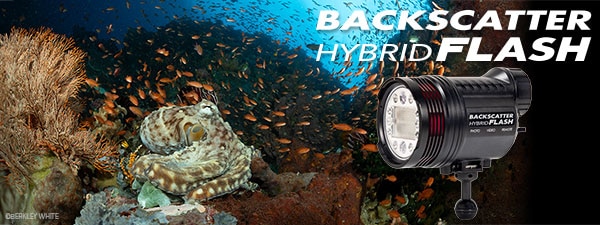
Backscatter Hybrid Flash Underwater Strobe & Video Light Review
With the introduction of the Backscatter Hybrid Flash HF-1, underwater photographers can now capture stunning stills and video with a single versatile tool. The Hybrid is the most powerful strobe and ...
Read More 
Nauticam MFO-1, MFO-3, & SMC-3 Underwater Macro Lens Review
What if you could transform your camera’s macro lens into three radically different tools? That’s exactly what Nauticam’s MFO-1, Nauticam SMC-3, and Nauticam MFO-3II make possible. While they may look...
Read More 
Sony a7R VI Underwater Camera Review
The Sony a7R VI is the latest generation of Sony's high-resolution full-frame mirrorless camera, and on paper, it looks like a relatively modest update to the already excellent Sony a7R V. The re...
Read More 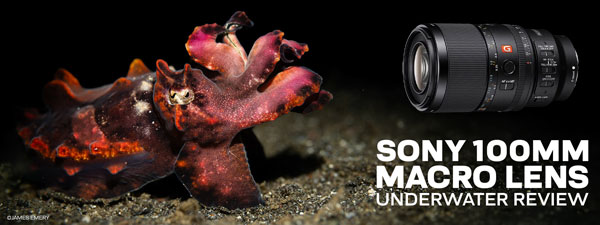
Sony 100mm Macro Lens Underwater Review
The Sony 100mm is the most exciting new macro lens for underwater imaging we have seen in years. Featuring high-quality, razor-sharp G Master series glass, enhanced autofocus performance, a native 1.4...
Read More 
The Best Underwater Strobes Tested 2026
It may or may not be a surprise, but there are no industry standards or governing bodies conforming the methods, or the specifications, on how underwater strobes are tested. Most strobe manufacturers ...
Read More 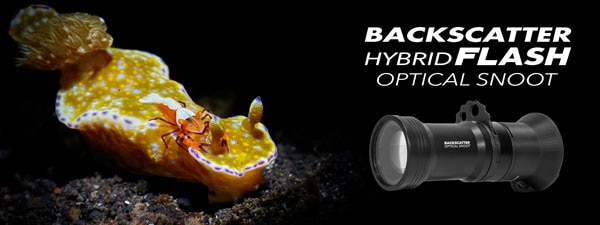
Backscatter Hybrid Flash Underwater Optical Snoot Review
With the Optical Snoot OS-3, the super-bright, wide-angle beam of the Hybrid Flash is transformed into a precision lighting tool. From tiny macro critters to dramatic fish portraits, the Optical Snoot...
Read More