Sony 8-14mm Fisheye Lens — First Look Underwater
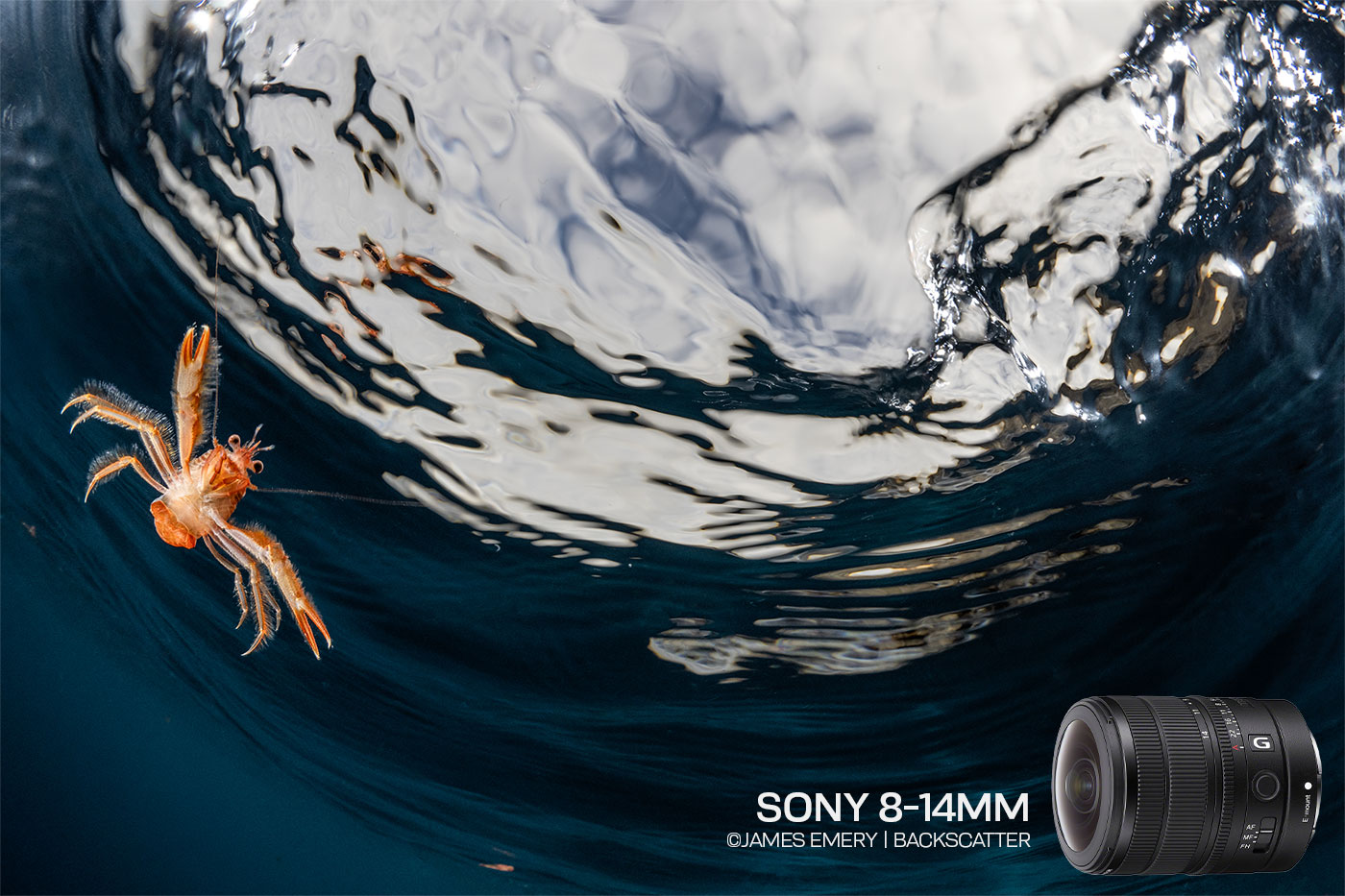
THE NATIVE WIDE-ANGLE WE'VE BEEN WAITING FOR For years, Sony full-frame underwater shooters have had a glaring hole in their gear bags: the lack of a native fisheye lens. To get that classic ultra-wide perspective, our only real option was to shoot the Canon 8-15mm fisheye lens paired with a mount adapter. While that setup got the job done, it was never perfect. Relying on adapted glass meant compromising on autofocus performance. Focus hunting was a common frustration, and it just never matched the blazing-fast autofocus speeds we've come to expect from modern Sony mirrorless bodies. Now, the wait is finally over. The new Sony FE 8-14mm ƒ3.5 Fisheye G Lens has arrived, and it completely changes the game for Sony wide-angle shooters, allowing us to finally ditch the adapters and get back to native AF performance. Sony has finally released a native fisheye lens, completely changing the game for full-frame wide-angle shooters.Sony a7R VI | Sony 8-14mm Lens | 1/250 | ISO 800 | ƒ14TWO LENSES IN ONE (BUT WE LIVE AT 14MM) This unique lens offers two completely different creative perspectives in one compact 11.1 oz / 314g body. Dialed all the way back to 8mm, it produces a classic 180-degree circular fisheye. While the circular look is great for creative framing, where this lens really shines for our testing team—and the focal length used for all the sample images in this review—is zoomed in to 14mm. At 14mm, it transforms into a frame-filling, 180-degree diagonal fisheye. For reefscapes, megafauna, and extreme close-focus wide-angle (CFWA), this is the absolute sweet spot. At 14mm, the lens transforms into a frame-filling, 180-degree diagonal FOV. Perfect for reefscapes, megafauna, and extreme close-focus wide-angle.Sony a7R VI | Sony 8-14mm Lens | 1/250 | ISO 200 | ƒ22NATIVE AUTOFOCUS: SAY GOODBYE TO FOCUS HUNTING Because this is a native Sony G-series lens, the autofocus performance is a massive leap forward. It completely eliminates the sluggish AF and hunting we used to experience with the adapted Canon 8-15mm lens. It confidently locks onto subjects and tracks perfectly. This is a major asset when you're shooting fast-moving subjects or trying to nail focus in heavy surge. The new Sony 8-14mm lens allows Sony shooters to finally ditch the Canon 8-15mm and mount adapter, eliminating frustrating focus hunting and unlocking the blazing-fast native autofocus.THE CLOSE-FOCUS WIDE-ANGLE DREAM The cardinal rule of underwater photography is to get close, and the Sony 8-14mm makes that effortless. With a minimum focusing distance of just 5.9 inches / 15cm, you can push right up to the reef. Eliminating that extra water column between your dome and your subject drastically improves color, contrast, and clarity in your foregrounds. Whether you're lighting up a gorgonian with a pair of strobes or pushing in close to a friendly sea lion, the CFWA potential here is off the charts. The close-focus wide-angle potential of the Sony 8-14mm lens is off the charts. An incredibly close minimum focusing distance of 5.9 inches / 15cm.Sony a7R VI | Sony 8-14mm Lens | 1/200 | ISO 250 | ƒ16INTERNAL ZOOM & THE 14MM ZOOM LOCK One of the biggest ergonomic wins for underwater shooters is the internal zoom mechanism. The physical length of the lens (a stubby 3.25 inches / 8.3cm) never changes as you zoom. Because the lens barrel doesn't telescope, you don't have to worry about dialing in exact port extensions to accommodate lens travel. A dedicated 14mm zoom lock (highlighted) allows you to securely lock the focal length before dropping the camera into the housing. Even better for those of us who plan to live at the 14mm focal length, the lens features a dedicated zoom lock. You can lock it securely at 14mm before dropping the camera into the housing. Not only does this completely eliminate the need to install a zoom gear on the lens, but it also prevents accidental vignetting. Even with a zoom gear, it's incredibly easy for the focal length to slip slightly wider during a dive, causing dark corners in your images. This lock is a fantastic addition that guarantees your 14mm framing stays exactly where you set it. DEDICATED PORTS & HOUSING SUPPORT Because this is such a highly anticipated release for Sony shooters, we fully expect to see custom port solutions and supported configurations rolling out from all the major housing manufacturers very soon. For those ready to get this lens wet immediately, several top brands are already out of the gate. AOI and Nauticam have both released brand-new ports designed specifically for this lens: the AOI DLP-111 Glass Dome, AOI DLP-112 Acrylic Dome, and Nauticam N100 140mm Dome. Seacam also currently offers support with a variety of domes, including the Seacam CP Compact Dome. These dedicated setups let you build an ultra-streamlined, travel-friendly rig. The Sony 8-14mm lens is currently supported by AOI, Nauticam, and Seacam. We expect full support from all major brands soon.MORE TO COME IN OUR FULL REVIEW The Sony FE 8-14mm ƒ3.5 Fisheye G lens is shaping up to be exactly what Sony shooters have been begging for: a lightweight, internally zooming, native fisheye with lightning-fast AF. This is just our first look, and we’ll be putting this lens through its paces in the coming weeks. We will follow up with a full, comprehensive review and extensive in-water data soon. For now, if you’re ready to ditch the heavy adapters, stop fighting sluggish autofocus, and push your wide-angle creativity to the next level, this lens is already earning a permanent spot in our gear bags. So far, we are impressed with the Sony 8-14mm lens and looking forward to shooting it more.Sony a7R VI | Sony 8-14mm Lens | 1/250 | ISO 400 | ƒ13WHY BUY FROM BACKSCATTER?Free lifetime tech support with every purchase. We will beat any advertised price. 20+ years of in-house warranty service and repair. Free shipping to the USA and Canada, and low-cost international shipping.Learn more!IMAGE GALLERY Check out our sample images captured using the Sony 8-14mm lens underwater. Click on an image to enlarge it for even more detail. .photo-modal-dialog { width: 100% !important; height: auto !important; padding-right: 3% !important; padding-left: 3% !important; display: block; float: left; } ××××××THE LENSSony 8-14mm Fisheye LensORDER NOW
Related Posts
Backscatter Hybrid Flash Underwater Strobe & Video Light Review
With the introduction of the Backscatter Hybrid Flash HF-1, underwater photographers can now capture stunning stills and video with a single versatile tool. The Hybrid is the most powerful strobe and ...
Read More 
Sony 8-14mm Fisheye Lens — First Look Underwater
For years, Sony full-frame underwater shooters have had a glaring hole in their gear bags: the lack of a native fisheye lens. To get that classic ultra-wide perspective, our only real option was to sh...
Read More 
Nauticam MFO-1, MFO-3, & SMC-3 Underwater Macro Lens Review
What if you could transform your camera’s macro lens into three radically different tools? That’s exactly what Nauticam’s MFO-1, Nauticam SMC-3, and Nauticam MFO-3II make possible. While they may look...
Read More 
Sony a7R VI Underwater Camera Review
The Sony a7R VI is the latest generation of Sony's high-resolution full-frame mirrorless camera, and on paper, it looks like a relatively modest update to the already excellent Sony a7R V. The re...
Read More 
Sony 100mm Macro Lens Underwater Review
The Sony 100mm is the most exciting new macro lens for underwater imaging we have seen in years. Featuring high-quality, razor-sharp G Master series glass, enhanced autofocus performance, a native 1.4...
Read More 
The Best Underwater Strobes Tested 2026
It may or may not be a surprise, but there are no industry standards or governing bodies conforming the methods, or the specifications, on how underwater strobes are tested. Most strobe manufacturers ...
Read More