
Sony 100mm Macro Lens Underwater Review
Watch our comprehensive review of the Sony 100mm macro lens and see how it is a solid step-up from the classic Sony 90mm macro lens. Watch our video on YouTube. The Sony 100mm macro lens is the most exciting new macro lens for underwater imaging we have seen in years. Featuring high-quality, razor-sharp G Master series glass, enhanced autofocus performance, a native 1.4:1 reproduction ratio, and compatibility with Sony teleconverters, the Sony 100mm macro lens represents a meaningful upgrade over the older Sony 90mm macro lens. The Sony 100mm macro lens is one of the sharpest macro lenses we have used to date, and edges out the older Sony 90mm in terms of overall image quality. Sony a7R V | Sony 100mm Macro Lens | 1/200 | ISO 320 | ƒ7.1 We tested the Sony 100mm macro lens extensively underwater in a wide variety of shooting conditions, pairing it with teleconverters, super macro optics, and specialty underwater lenses, including the Nauticam MFO and EMWL systems. In this review, we’ll break down image quality, autofocus performance, magnification capabilities, accessory compatibility, and whether the upgrade is worth it for existing Sony macro shooters. The Sony 100mm macro lens is a much needed upgrade to the older Sony 90mm macro lens, featuring significant improvements in image quality, autofocus, and close-focusing capabilities.Sony’s Sharpest Macro Lens Yet The Sony 100mm macro lens delivers exceptional image quality underwater and is among the sharpest macro lenses we have ever tested, rivaling the sharpest macro lens we have ever used, the OM System 90mm. Compared to the older Sony 90mm macro lens, the Sony 100mm macro lens produces noticeably finer detail thanks to its high-quality G Master optics. Beyond sharpness, the Sony 100mm macro lens also produces excellent background rendering with smooth, pleasing bokeh that works especially well for macro portraits. Diffraction was still visible at its minimum aperture of ƒ22, similar to the Sony 90mm macro lens. For this reason, we recommend shooting at ƒ16 or wider for the sharpest results. Shot at ƒ16Shot at ƒ22Despite the extreme quality and sharpness of the Sony 100mm macro lens, we did notice diffraction at ƒ22, much like the Sony 90mm macro lens. For this reason, we shot it at ƒ16 and below to take full advantage of the high-quality G Master glass. Sony a9 III | Sony 100mm Macro Lens | 1/800 | ISO 125Native 1.4:1 Super Macro Capability One of the biggest advantages of the Sony 100mm macro lens is its native 1.4:1 reproduction ratio, compared to 1:1 on the Sony 90mm macro lens. Underwater, this increase in magnification is significant. Small subjects that previously required a close-up diopter to fill the frame with the Sony 90mm macro lens can now be captured using the Sony 100mm macro lens alone. The increased magnification effectively pushes the lens into super macro territory without requiring additional optics. Despite this, the Sony 100mm macro lens can still benefit from close-up diopters and macro optics for even closer and creative shooting. Using the Sony 100mm macro lens, you are now able to capture tighter images natively than what was possible using the Sony 90mm macro lens. The 1.4:1 reproduction ratio of the Sony 100mm macro lens means small subjects will appear 40% larger than life-size on your sensor when compared to the 1:1 reproduction ratio of the Sony 90mm macro lens.Sony a7R V | Sony 100mm Macro Lens | 1/250 | ISO 100 | ƒ18Better Focus Tracking, Less Hunting Autofocus performance was one of the biggest improvements we noticed compared to the Sony 90mm macro lens. Sony shooters using older camera bodies, pre Sony a7S III, will likely be all too familiar with the sluggish autofocus performance of the Sony 90mm macro lens. While newer Sony cameras significantly improved autofocus performance with the Sony 90mm macro lens, the new Sony 100mm macro lens still performs noticeably better. In our testing, the Sony 100mm macro lens demonstrated more reliable subject detection, reduced focus hunting, and more consistent tracking performance on small subjects. This improvement became especially noticeable at higher magnifications, where autofocus systems are typically pushed to their limits. The Sony 100mm macro lens demonstrated consistent and improved auto focus performance over the Sony 90mm macro lens. Importantly, the Sony 100mm macro lens easily tracked subjects and could take full advantage of eye and subject detection modes, even during close-up shooting.Sony a7R V | Sony 100mm Macro Lens | 1/80 | ISO 100 | ƒ2.8Get Closer Without Getting Closer with Teleconverters One of the most unique advantages of the Sony 100mm macro lens is its compatibility with Sony 1.4x Teleconverter and Sony 2.0x Teleconverter — something rarely seen with macro lenses. For underwater photographers, this is especially useful when shooting shy or difficult-to-approach subjects. A Sony 1.4x Teleconverter increases focal length and magnification by 40%, while a Sony 2.0x Teleconverter doubles it, allowing you to fill more of the frame without physically moving closer to your subject. Additionally, compared to using a macro diopter, a teleconverter retains significantly more depth of field, helping you keep more of your subject in sharp focus. In practice, we found the Sony 1.4x Teleconverter to be an excellent pairing with the Sony 100mm macro lens underwater. Autofocus performance remained highly reliable, with fast subject tracking and minimal focus hunting even at higher magnifications. The added reach made a major difference for skittish subjects that tend to hide when approached too closely. Using the Sony 1.4x Teleconverter, we were able to capture frame-filling images that would have been extremely difficult with the lens alone. We also tested the Sony 2.0x Teleconverter, which provided even greater magnification, though for most underwater shooting scenarios it felt like more reach than we typically needed. As with any teleconverter setup, there are some tradeoffs. The Sony 1.4x Teleconverter reduces the maximum aperture from ƒ2.8 to ƒ4, and image quality can begin to soften slightly at narrower apertures due to diffraction. Overall, teleconverter compatibility adds a level of versatility to the Sony 100mm macro lens that few macro lenses can match underwater. Using the Sony 1.4x Teleconverter, it is now possible to capture small skittish subjects like this twin spot goby. The Sony 1.4x Teleconverter makes the subject appear 40% larger on the sensor, without the need to get closer.Sony a7R V | Sony 100mm Macro Lens & Sony 1.4x Teleconverter | 1/160 | ISO 100 | ƒ4Exceptional Compatibility with Underwater Optics One of the biggest strengths of the Sony 100mm macro lens underwater is how well it performs with accessory optics. During testing, we paired the lens with a variety of optics from Nauticam and AOI, and the Sony 100mm macro lens consistently delivered excellent image quality and reliable autofocus performance across all configurations. With the Nauticam SMC-3, the Sony 100mm macro lens was capable of reaching extreme super-macro magnifications, allowing us to capture highly detailed images of tiny subjects beyond the lens’s native 1.4:1 reproduction ratio. Using close-up diopters like the Nauticam SMC-3, the Sony 100mm macro lens can focus extraordinarily close, allowing it to capture the finest details and smaller critters. The Sony 100mm macro lens can easily autofocus through these lenses, the biggest challenge of any macro autofocus system.Sony a7R V | Sony 100mm Macro Lens & Nauticam SMC-3 | 1/160 | ISO 100 | ƒ16 We also tested Nauticam’s MFO optics. The Nauticam MFO-1 provided a slight increase in magnification while improving focus performance and image sharpness, making it an excellent option for close macro work. The Nauticam MFO-3II expanded the field of view closer to a 60mm perspective underwater, making it easier to shoot larger subjects and proving especially useful for blackwater photography. Using the Nauticam MFO-3II, the field of view of the Sony 100mm macro lens increases to that of a 60mm lens. This, combined with close focusing performance, transforms the Sony 100mm macro lens into a superb blackwater lens without the need for an additional camera lens or port.Sony a7R V | Sony 100mm Macro Lens & Nauticam MFO-3II | 1/250 | ISO 200 | ƒ18 The most unique setup we tested was the Nauticam EMWL Extended Macro Wide Lens System. This optic creates a dramatic wide-angle perspective around a macro subject, producing a distinctive “bug’s-eye” look that is difficult to achieve with traditional macro setups. The Sony 100mm macro lens performed especially well with the EMWL. Compared to the older Sony 90mm macro lens, which could occasionally backfocus or miss focus with the Nauticam EMWL 160 Degree Lens attached, the Sony 100mm macro lens delivered much more consistent autofocus performance. Across all of these configurations, the Sony 100mm macro lens proved to be an extremely versatile underwater macro lens that adapts well to a wide variety of shooting styles and subjects. The Sony 100mm macro lens works extraordinarily well with specialty underwater optics like the Nauticam EMWL 160 Degree Lens, providing reliable focusing capabilities resulting in more keeper images.Sony a7R V | Sony 100mm with Nauticam EMWL 160 Degree Lens, Nauticam EMWL Relay Lens, & Nauticam EMWL Focusing Unit 3 | 1/80 | ISO 1,000 | ƒ14Lens Stabilization That’s Almost Too Good The Sony 100mm macro lens includes optical stabilization in addition to in-body stabilization found in most Sony camera bodies. Stabilization performance was excellent for handheld shooting and macro video, offering up to nine stops with the body. However, when intentionally shooting motion blur or slow shutter techniques, stabilization occasionally worked against the desired effect. Disabling both lens and in-camera stabilization resolved this issue. Shots like this required us to disable lens stabilization. With lens stabilization enabled, the desired blur effect was nearly impossible to accomplish. Keep in mind, this is a physical switch on the lens that needs to be adjusted before loading it into the housing.Sony a7R V | Sony 100mm Macro Lens | 1/4 | ISO 100 | ƒ18CONCLUSIONWho Is the Sony 100mm Macro For? The Sony 100mm macro lens is an excellent choice for underwater photographers who want to push their macro imaging further. Between the increased sharpness, improved autofocus performance, native 1.4:1 magnification, and compatibility with teleconverters and underwater optics, the lens offers a level of versatility that few macro lenses can match underwater. Its improved autofocus reliability also makes it especially appealing for shooters looking for reliable tracking and subject detection compared to the Sony 90mm macro lens. For existing Sony 90mm macro lens owners, the decision largely comes down to how much you value the improvements in sharpness, magnification, autofocus consistency, and accessory compatibility. While the Sony 90mm macro lens remains a capable macro lens, the Sony 100mm macro lens is a meaningful step forward for photographers looking for the highest possible performance from a Sony underwater macro setup. WHY BUY FROM BACKSCATTER?Free lifetime tech support with every purchase. We will beat any advertised price. 20+ years of in-house warranty service and repair. Free shipping to USA and Canada and low-cost international shipping.Learn more!SAMPLE IMAGES Check out our sample images captured using the Sony 100mm macro lens underwater. Click on an image to enlarge it for even more detail. .photo-modal-dialog { width: 100% !important; height: auto !important; padding-right: 3% !important; padding-left: 3% !important; display: block; float: left; } ××××××××××××××××××××××××××××××THE LENS Sony FE 100mm f/2.8 GM OSS Macro LensORDER NOWTeleconverters Sony 1.4x Teleconverter LensORDER NOW Sony 2x Teleconverter LensORDER NOWNauticam LensesSMC & MFO Lenses Nauticam SMC-3 Super Macro Converter 3 Macro Diopter LensORDER NOW Nauticam SMC-2 Super Macro Converter 2 Macro Diopter LensORDER NOW Nauticam MFO-1 Mid-Range Focus Optimizer 1 Macro Diopter LensORDER NOW Nauticam MFO-3 Mid-Range Focus Optimizer 3 Macro Diopter LensORDER NOWEMWL Lenses and Mounts Nauticam EMWL 160° Objective LensORDER NOW Nauticam EMWL 130° Objective LensORDER NOW Nauticam EMWL 100° Objective LensORDER NOW Nauticam EMWL 60° Objective LensORDER NOW Nauticam EMWL Focusing Unit for SonyORDER NOW Nauticam EMWL Relay LensORDER NOW Nauticam EMWL Underwater Lens Set #3 for SonyORDER NOWAOI Lenses AOI UCL-05L Underwater +6 Close-Up LensORDER NOW AOI UCL-09PRO +12.5 Close Up LensORDER NOW AOI UCL-90PRO +18.5 Close Up LensORDER NOW AOI UCL-900PRO +23.5 Close Up LensORDER NOW
Related Posts
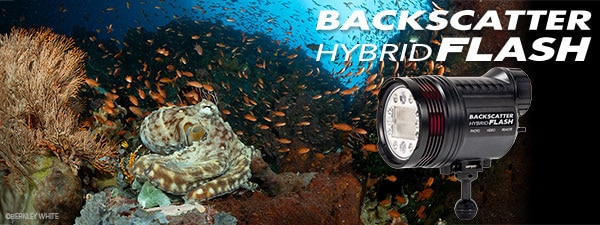
Backscatter Hybrid Flash Underwater Strobe & Video Light Review
With the introduction of the Backscatter Hybrid Flash HF-1, underwater photographers can now capture stunning stills and video with a single versatile tool. The Hybrid is the most powerful strobe and ...
Read More 
Sony a7R VI Underwater Camera Review
The Sony a7R VI is the latest generation of Sony's high-resolution full-frame mirrorless camera, and on paper, it looks like a relatively modest update to the already excellent Sony a7R V. The re...
Read More 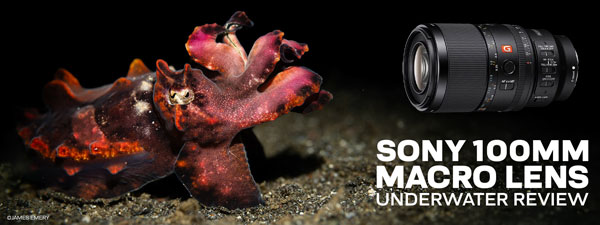
Sony 100mm Macro Lens Underwater Review
The Sony 100mm is the most exciting new macro lens for underwater imaging we have seen in years. Featuring high-quality, razor-sharp G Master series glass, enhanced autofocus performance, a native 1.4...
Read More 
The Best Underwater Strobes Tested 2026
It may or may not be a surprise, but there are no industry standards or governing bodies conforming the methods, or the specifications, on how underwater strobes are tested. Most strobe manufacturers ...
Read More 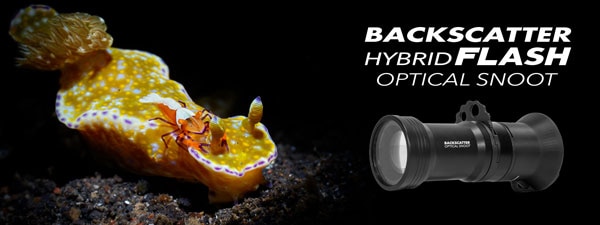
Backscatter Hybrid Flash Underwater Optical Snoot Review
With the Optical Snoot OS-3, the super-bright, wide-angle beam of the Hybrid Flash is transformed into a precision lighting tool. From tiny macro critters to dramatic fish portraits, the Optical Snoot...
Read More 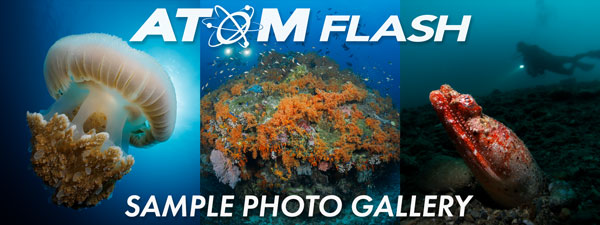
Backscatter Atom Flash Sample Photo Gallery
The new Atom Flash and Optical Snoot OS-2 combo is an incredibly versatile underwater flash system, built from the ground up for the purist underwater photographer. Whether lighting massive underwater...
Read More